The Art of Bone Inlay Furniture: A Buyer’s Guide for Australian Homes
Bone inlay furniture is one of the few remaining handcraft traditions where every piece is genuinely made by hand. No two items are identical. For Australian homeowners looking for furniture with soul, character and a story worth telling, bone inlay offers something that mass-produced alternatives simply cannot.
At Empress Homewares in Norwood, Adelaide, we’ve built a collection of bone inlay pieces sourced directly from master artisans in North India, from statement sideboards and dining tables to bedside tables and decorative accessories.
What Is Bone Inlay Furniture?
Bone inlay is a centuries-old decorative technique originating from Rajasthan, India. Artisans hand-carve small pieces of ethically sourced camel bone, then set each fragment into a base of coloured resin on a timber frame. The process for a single piece, like a chest of drawers or sideboard, can take weeks or even months to complete.
The result is a surface of intricate geometric, floral or abstract patterns with a luminous, tactile quality that paint or veneer cannot replicate. Each bone piece catches the light differently, giving the furniture a subtle depth that changes throughout the day.
How to Identify Quality Bone Inlay
Not all bone inlay is created equal. When investing in a piece for your home, here’s what to look for:
- Tight, even pattern alignment. In quality work, the bone pieces sit flush within the resin with minimal gaps. Run your fingers across the surface; it should feel smooth, not rough or uneven.
- Consistent resin colour. The resin base (typically black, grey, white or navy) should be uniform across the entire piece without patchy areas or discolouration.
- Solid timber frame. Quality bone inlay sits on mango wood or sheesham (Indian rosewood). Avoid pieces built on MDF or particleboard. They won’t support the weight or withstand Australian humidity.
- Smooth drawer runners and hardware. Craftsmanship extends beyond the surface. Drawers should glide smoothly and handles should feel substantial.
- Weight. Genuine bone inlay furniture is heavy. A bedside table will weigh 15-20kg; a sideboard 40-60kg. If it feels light, the materials may be inferior.
We recommend seeing bone inlay in person before purchasing. Visit our Norwood showroom to feel the craftsmanship up close. Photos don’t fully capture the texture and luminosity of the real thing.
Styling Bone Inlay in Australian Homes
One of the reasons bone inlay works so well in Australian interiors is its versatility. The clean geometric patterns complement both contemporary and coastal styles, while the handcrafted character adds warmth to minimalist spaces.
In the Entryway
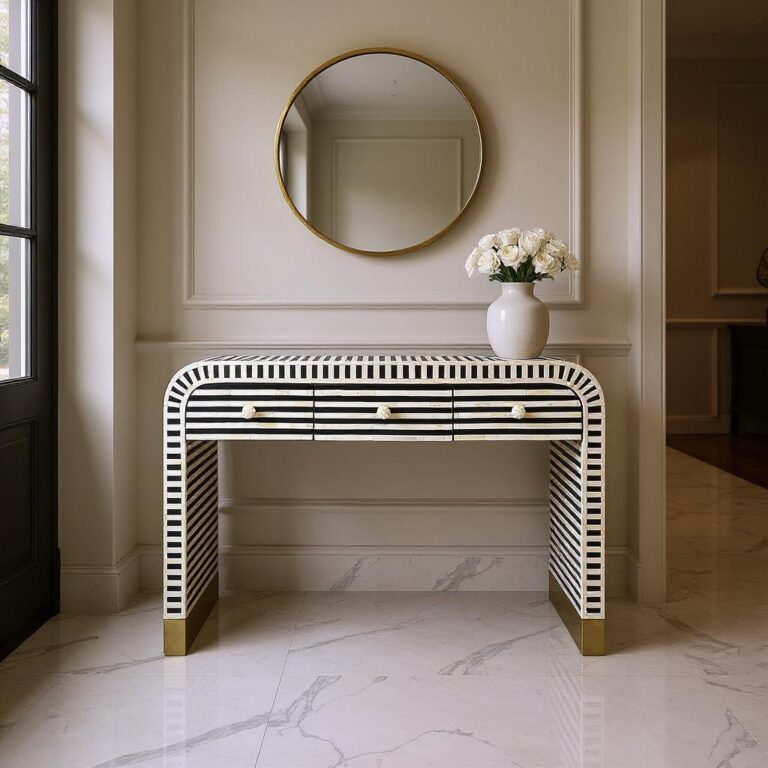
A bone inlay console table is the ultimate first impression. The Gatsby Bone Inlay Console Table in Black Resin pairs beautifully with a simple mirror and a single sculptural object on top. Its three drawers handle keys, mail and everyday clutter without sacrificing style.
In the Bedroom
Bone inlay bedside tables bring personality to the bedroom without overwhelming the space. The Zafina Bedside Table in Black Resin features a striking geometric pattern that works as a statement against neutral bedding. For a softer contrast, the Cubism Bone Inlay Bedside Table sets a cubist geometric pattern in black, white and natural tones.
In the Living Room
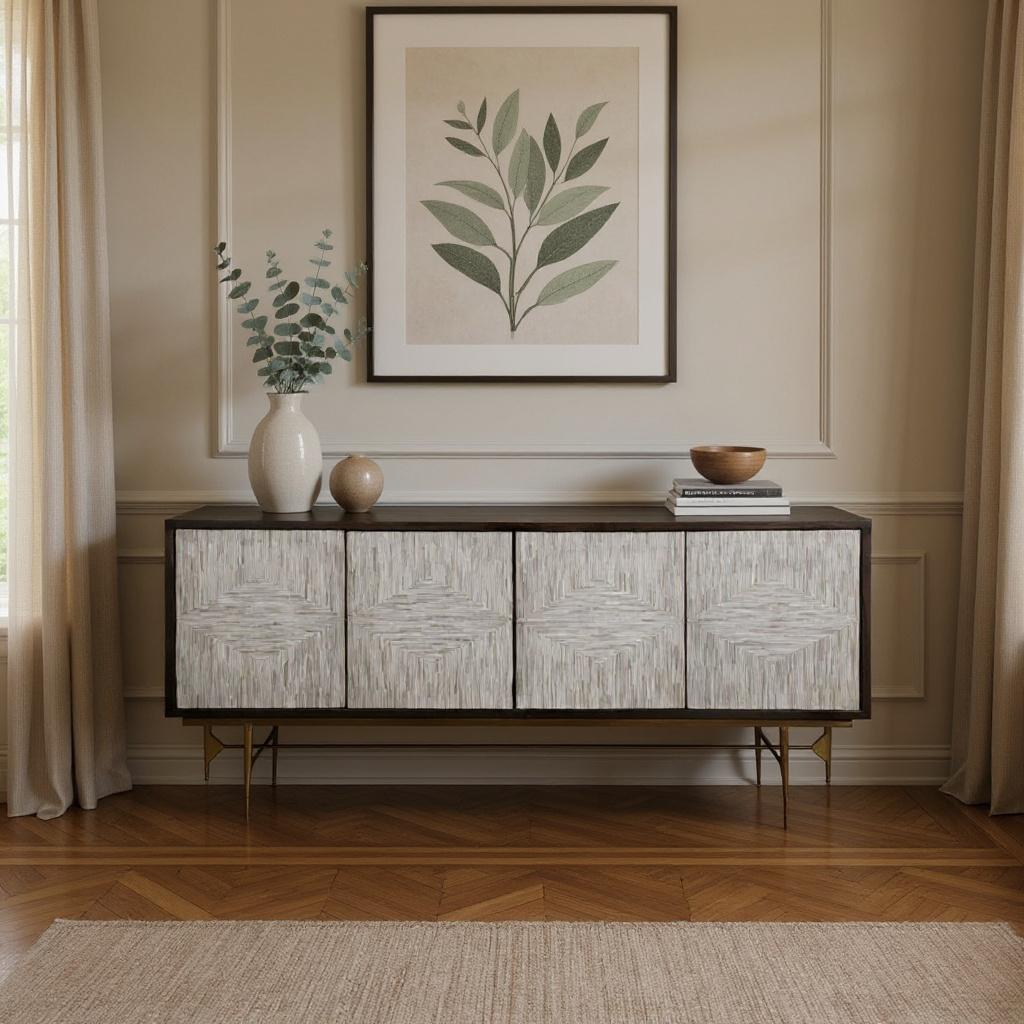
A Mayan Bone Inlay Coffee Table becomes the focal point of any living room. Alternatively, position a sideboard like the Moulin Ray Bone Inlay Sideboard against a feature wall for a gallery-worthy statement.
In the Dining Room
The Marrakech Round Dining Table seats four comfortably and transforms everyday meals into something special. Its round shape works particularly well in smaller dining areas or as an occasional table in larger spaces.
Caring for Your Bone Inlay Furniture
Bone inlay is surprisingly low-maintenance when treated with basic care:
- Daily cleaning. Wipe with a soft, dry cloth. Avoid abrasive cleaners or scouring pads.
- Spills. Blot immediately with a damp cloth. The resin base is relatively water-resistant, but standing liquid can seep into gaps over time.
- Sun exposure. Avoid placing bone inlay in direct, prolonged sunlight. Australian UV can yellow the bone and fade the resin over time. Indirect light is fine.
- Temperature. Keep away from heat sources like fireplaces and heating vents. Bone can expand and contract with temperature changes.
- Waxing. Apply a thin coat of beeswax polish once or twice a year to maintain the lustre.
Why Choose Bone Inlay?
In a market dominated by flat-pack furniture and mass production, bone inlay is a conscious choice to invest in something made by human hands. Each piece supports artisan communities in Rajasthan who have passed these techniques down through generations.
It’s also a practical investment. Quality bone inlay furniture holds its value and develops character over decades. it’s not something you’ll replace in five years. For Australian homes where we spend more time than ever, surrounding yourself with pieces that have genuine craftsmanship and history is an investment in how your home feels every day.
Explore the full Bone Inlay Collection at Empress Homewares, or visit our Norwood showroom in Adelaide to see and feel the craftsmanship in person. Afterpay available on all pieces.
Frequently Asked Questions About Bone Inlay Furniture
What is bone inlay furniture and how is it made?
Bone inlay furniture is hand-crafted furniture where individual tiles of polished bone are set into a resin base in a decorative pattern. The craft originated in the Mughal courts of Rajasthan in northern India and is still made the same way today. Each tile is hand-cut, polished, and placed one by one. A typical bone inlay console contains several thousand individual tiles and takes a small team four to six weeks to complete.
Is bone inlay furniture ethically sourced?
The bone used in genuine bone inlay furniture is camel bone, ethically sourced as a by-product of the meat industry rather than from any animal farmed for ornamental use. No animal is harmed for the bone. The material would otherwise be discarded. Reputable Indian artisan workshops have followed this practice for generations.
How can you tell genuine bone inlay from a machine-pressed replica?
Look at the back of the tiles where they meet the resin. Hand-set bone shows tiny variations in tile placement, slight gaps, small angle differences, the resin sitting at marginally different depths between tiles. Machine-pressed alternatives look perfectly uniform because they are. Also check the price: a genuine large bone inlay console rarely costs less than $1,500 because of the labour involved.
What is the difference between bone inlay and mother of pearl inlay?
Bone inlay uses polished bone tiles, typically set against black, grey, or navy resin. Mother of pearl inlay uses thin slices of shell, which gives a finer iridescent finish that catches the light differently. Mother of pearl is generally more expensive per piece because the material is harder to source and more delicate to work with.
How do I care for bone inlay furniture in an Australian climate?
Wipe with a soft, slightly damp cloth and dry immediately. Keep the piece out of direct, harsh sunlight (especially in northern-facing rooms during summer). Prolonged UV can fade the resin over years. Avoid commercial wood polish, silicone sprays, or harsh chemicals; the bone and resin do not need them. Australian indoor humidity is generally fine for bone inlay; the only concern is sustained heat near windows.
Where can I buy genuine bone inlay furniture in Australia?
For Adelaide and South Australia, you can view bone inlay furniture in person at Empress Homewares, 7 Osmond Terrace, Norwood SA 5067. The showroom holds a range of consoles, chests of drawers, and bedside tables sourced directly from artisan workshops in Rajasthan. Online buyers across Australia can browse the full collection and order for delivery, or choose Click and Collect from our Norwood showroom.